
















STOP=
DIM=

About Apollo Cosmetic Clinics

Looking good is now more for oneself, to strengthen one's self confidence and build an overall feeling of wellness.Apollo Cosmetic Clinics, a dedicated centre of excellence from the renowned Apollo Hospitals group, offer comprehensive treatments for a range of cosmetic enhancements.

Why choose us?

Safety

  • Premium range products providing the highest level of safety and effectiveness
  • Best Solutions in latest cosmetic treatments, introduced only after assessing their safety and efficacy.
  • Zero Infection Zone

Under 1 roof

  • A dedicated Centre of excellencefor bothinvasive and non-invasive

Advanced Technology

  • State of the art facilities with the most advanced surgical & non-surgical procedures in India.

Expert Team

  • Top Plastic and Cosmetic Surgeons in India as Senior Consultants with a team of friendly and professional staff

Facilities

The extensive experience of Apollo Hospitals' specialists in cosmetic surgery, the fully equipped procedure suites, zero infection zones and the international standard protocols followed at the Clinics, ensure world class medical care. Our extensive experience with quality programmes and being part of the network of Apollo hospitals, several of whom are JCIA accredited, gives us the extra focus on stringent quality control measures.

At the same time, the warm and cheerful patient centric ambience, friendly staff and the never-to-be-compromised Apollo credo of Tender Loving Care assure comfort, confidence and the much needed privacy and confidentiality.

Situated well within the expanse of India's first Joint Commission International accredited Indraprastha Apollo Hospitals, yet in the most secluded yet exclusive dedicated state-of-art facility that epitomizes beauty and respects its clients' privacy. The centre offers aesthetic and cosmetic treatments and surgeries backed by an internationally trained team of surgeons and dermatologists with vast experience in this field. This centre is envisaged to provide its patronage the most exclusive services under one roof. From the most advanced and latest non-surgical options including botox, fillers and latest lasers (for hair removal, skin lightening, treatment of pimples/ acne scars, skin tightening, tattoo removal and scar removal) to option of all aesthetic surgery procedures including VASER which are done in a dedicated sterile OT complex within the centre by the most experienced and renowned Cosmetic Surgeons of the country.

The aim of this facility is to offer you the most comprehensive option of aesthetic procedures and cosmetic surgery services at an exquisite place which respects client privacy and confidentiality at the same time compromising at nothing to offer the best possible care in a setting that is capable of handling the most complex of medical conditions.

Apollo Expertise

It is often said that nothing happens, unless there is a dream first. At the genesis of the Apollo story there was a dream. A dream so powerful, that it helped transform the medical landscape in India.

Why cosmetic medicine

Cosmetic Medicine encompasses both the non-surgical modalities of treatment and Cosmetic Surgery. Yes, Cosmetic surgery is a surgical procedure and having cosmetic surgery is a decision that must be thought through carefully.

Cosmetic Medicine can be exactly what you need to enhance your self- image. Having a positive self-image can give you the self confidence that you need to get a better job, try new things and live life the fullest with a renewed sense of wellbeing.

Another advantage of cosmetic surgery is the ability to correct physical defects. Many people may have physical defects that have resulted from an accident or a bad case of acne as a teenager. Some people are born with physical defects that have plagued them since birth and cosmetic surgery can finally give them a shot at a normal life.

But if you are in good general health and decide that cosmetic surgery is something that you want to do, you must know that today, in the hands of expert surgeons and world class facilities like Apollo Cosmetic clinics, the risks are really minimal and the procedures are absolutely safe.

If you have decided to get any type of procedure, choose your surgeon wisely. Get recommendations from your doctor. If possible, talk to former patients to get their input on a particular cosmetic surgeon. If you know of anyone who has had surgery, ask them for a recommendation.

Cosmetic surgery can be exactly what the doctor ordered if you are dealing with self-esteem issues. All in all, the advantages of cosmetic surgery can outweigh the risks if it can change your life for the better.

Everyone deserves to look their best. So do take the first step in making that major change with your body today with cosmetic surgery.

Invasive Procedures

An eyelid lift is done to even out the wrinkles around the eyes. Upper and lower eyelid wrinkles caused by the relaxation of the skin are removed and tightened. The area of concern is the lid fold for upper eyelid and at the eyelash margins for the lower lid. The skin is lifted and the excess skin, fat and muscle are removed and sutured. This procedure is done under local anesthesia with sedation and does not require hospital stay.

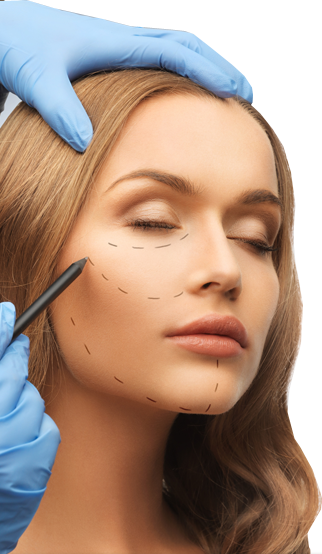
Face lifts are a simple way to restore elasticity and youthfulness of skin. This is done to correct the loose, sagging skin from the cheeks and neck. The area involved in surgery is around and above the ears and skin is lifted from the cheek and neck. The fascia over the muscle is also tightened and excess skin is removed and sutured. This surgery is done under local anesthesia with some sedation or general anesthesia to relax the patient and may require one day stay at the hospital.

Coming Soon...

A quick, safe and effective way to remove unwanted fat, liposuction removes fat from the body by using a tubular, probe connected to a suction machine or syringe. Fat collected on the hips, thighs, buttocks, abdomen, arms, under the chin and upper torso can be reduced by this procedure. Liposuction is neither a substitute for dieting nor a cure for obesity and does not prevent a person from gaining weight afterwards, therefore proper precaution and maintenance is necessary. People with reasonably normal weight and young, healthy, elastic skin, but with extra localized fat in certain areas, get the best results from this procedure. This procedure is usually done under general anesthesia and usually does not require a hospital stay. An overnight stay in larger liposuction may be warranted.

Coming Soon...

Coming Soon...

  • Breast Implant
  • Breast Lift
  • Breast Reduction
  • Male Breast Reduction

Although male and female hair loss pattern is hereditary and begins shortly after puberty, changing lifestyle choices also contribute to hair loss and baldness. Hair Restoration Surgery (Hair Transplant) is a permanent solution to lost scalp hair, including effective medical treatments, which are now offered in the form of a pill for men and a lotion/spray for men as well as women. Hair transplant is a surgical procedure by which permanent hair from regions of the scalp that normally never go bald, such as the sides and lower back of the head, are transferred (transplanted) to areas where thinning or hair loss commonly occurs. The procedure is performed under local anesthesia on an outpatient basis, and causes no or little pain. Sedation is very rarely used and patients will be fully awake during the operation.

Ear correction surgery is done on protruding ears to make them less visible. The missing fold is created by folding the ear cartilage and the skin is then sutured. It can be done under local or general anesthesia and usually does not require hospital stay.

Coming Soon...

Being the most noticeable part on your face, irregularities and deformities of the nose are apparent and prominent. Depending upon the case, Rhinoplasty includes elevation of a depressed nose by adding cartilage, bone or silicone implant, removal of a hump,reduction of the bulk of the tip of the nose, reduction of the size of the nostrils and narrowing of the base of the nose.Cosmetic Nose Surgery is done using either local anesthesia with sedation or general anesthesia and in most cases, either a single day or no hospital stay is required.

Coming Soon...

Abdominoplasty, better known as 'tummy tuck' basically tightens up loose skin in the stomach area, especially for women who have given birth or who have lost an excessive amount of weight, resulting in flab. Abdominoplasty involves resection of folds of skin of the abdomen, with relocation of navel and tightening of the abdomen muscles, to restore the lost tone during pregnancy. If someone has excess amounts of fat, liposuction may be done along with Abdominoplasty. This surgery requires general anesthesia and a three or four day stay in the hospital.

Coming Soon...

Coming Soon...

Non-Invasive Procedures

BOTOX

What is botulinum toxin?

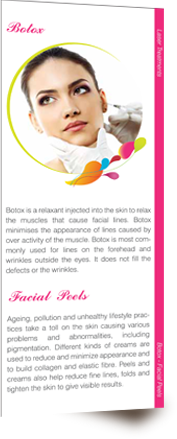
Botulinum toxin is one of the most important substance to hit the field of facial rejuvenation. Short of a surgical facelift, this substance is the most popular way to reduce facial wrinkles

  • Smiling, frowning, squinting and even chewing - basically any facial movement can eventually lead to one of the most common signs of aging: wrinkles. They can make you appear tired or even angry when you are not. One of the quickest and safest remedies to remove wrinkles is an injection of botulinum toxin.
  • Injections of this substance blocks muscular nerve signals, which then weakens the muscle so that it can't contract and diminishes your unwanted facial wrinkles.
  • Botulinum toxin can be combined with other cosmetic skin procedures such as chemical peels, dermal fillers or microdermabrasion to further improve your results. Thiscombination of therapies can even help to prevent the formation of new lines and wrinkles.

Botulinum toxin can be used as a wrinkle treatment to smooth:

  • Frown lines
  • Crows feet
  • Forehead furrows
  • Skin bands on the neck
COOLSCULPTING/CRYOLIPOLYSIS

Fastest ever non-surgical figure correction

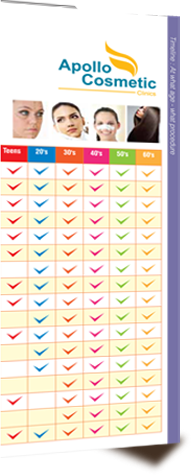
Ideal Candidate/ Agewise Suitability

The CoolSculpting fat reduction procedure is specially designed for those who have unwanted fat that resists diet and exercise. Unlike gastric bypass surgery, the CoolSculpting procedure is not a weight loss solution for people who are obese. It is, however, a non-surgical alternative to liposuction.

Agewise Suitability

20S TO 60S

What Is Coolsculpting?

CoolSculpting is a non-surgical contouring treatment that freezes stubborn fat, which is then naturally eliminated from your body. No needles, no special diet, no supplement and no surgery.

Most importantly, little to no downtime.It’s safe medically-cleared and effective.

Technology Used

PROVEN RESULTS WITHOUT SURGERY Renowned Harvard University scientists, Dieter Manstein, MD and R. Rox Anderson, MD, observed that some children got dimples due to eating popsicles. The idea that cold can selectively affect and eliminate fat cells without damaging the skin or surrounding tissue was the insight behind Cryolipolysis®the proven science on which the CoolSulpting procedure is based.

The CoolSculpting procedure is:

  • FDA-cleared
  • Non-surgical
  • Safe and effective
DERMAL FILLER

Fillers replace lost of volume, enhance volume of existing structure and help in filling in wrinkles and creases. Dermal fillers and sometime even ones own transplanted fat are used to replenish the skin's suppleness and help maintain its youthful appearance, smoothening out facial lines.

Laser Treatments

Cynosure Yag laser (unwanted hair removal/ fine veins/ leg veins)

Ideal Candidate/ Agewise Suitability

Almost everyone can enjoy the benefits of laser hair removal

People with light to medium colored skin and medium to dark colored hair are the best candidates for Laser Hair Removal Those with darker or tanned skin, or light colored hair, are usually more difficult to treat, but can still obtain very desirable results when treated on the appropriate laser and wavelength by a skilled technician.

Laser Hair Removal treats: Unwanted hair removal, fine veins, and leg veins "A simple equation for a “good” candidate is one who has skin that is lighter than their hair."

Agewise Suitability

20s to 50s

What is Laser hair removal?

Laser hair removal is a non-invasive technique that uses highly concentrated light to penetrate hair follicles. The intense heat of the laser damages the hair follicle to inhibit future hair growth. Laser hair removal is effective for most parts of the body.

As laser hair removal only affects actively growing hair follicles, it may take several laser hair removal treatments to provide significant hair reduction. Additionally, while laser hair removal effectively slows hair growth, it doesn’t guarantee permanent hair removal. Periodic maintenance treatments may be needed.

Technology Used

Long Pulse ND:YAG by Cynosure The high powered Nd:YAG laser is capable of treating all skin types but is more effective for the removal of hair from tanned and darker skin. It is also the preferred treatment for the removal of spider veins on the face and legs.

There are several application for the Laser, the parameters include pulse characteristics and multiple spot sizes. This allows clinicians to treat clients based on the skin type, hair type thus optimizing the outcome of the procedure. With the adjustable pulse function and the High peak power this will allows you to treat even the most challenging clients.

USP: Minimum Post Laser care

SKIN REJUVENATION

Q Switch Laser – Pigmentation, Malasma, Tattoo Removal CO2 Laser - Regular Mode- Moles & wart removal - Fractional Mode – Post Acne Scar/ Trauma Scar

Ideal Candidate/ Agewise Suitability

Laser skin rejuvenation procedure does an excellent job of diminishing the appearance of lines and wrinkles, scars, and irregular skin pigmentation. However, patients with certain skin types, skin tones, and medical conditions should consult a dermatologist to discover if you are a good candidate for the treatment.

  • Laser skin rejuvenation is an effective procedure for patients with lines, wrinkles, uneven pigmentation, or superficial facial scars such as acne scarring that does not respond to gentler treatments.
  • The ideal candidate for laser skin rejuvenation has elastic, non-oily skin that is not prone to scarring after minor injury. It is best that laser skin resurfacing be performed on a person who is free of any medical considerations, including prescription medication and existing health conditions that might cause unnecessary risk during the procedure or recovery period.
  • A good candidate would be a person who has realistic expectations for the results of the laser skin resurfacing procedure.

Agewise Suitability

40s TO 60s

What is Laser Rejuvenation?

Laser skin rejuvenation, also know as a laser peel, laser vaporization and laserabrasion, can reduce facial wrinkles, scars and blemishes. Newer laser technologies give your plastic surgeon a new level of control in laser surfacing, permitting extreme precision, especially in delicate areas.Laser skin resurfacing can improve minor facial flaws, such as:

  • Fine lines or wrinkles around or under your eyes, forehead or mouth
  • Scars from acne or chickenpox
  • Non-responsive skin after a facelift
  • Aged or sun-damaged skin
  • Improve your complexion if you have yellowish or grayish skin tones
  • Warts
  • Birthmarks such as linear epidermal nevus
  • Tattoo Removal
  • Enlarged oil glands on the nose

Technology Used

Q-switched laser is used to remove unwanted brown spots, pigmentary disorders of the sun freckles, or tattoos from your skin. The laser energy pulse, which is in billionths of a second, releases the pigment into the skin so it can be naturally reabsorbed and disposed of by the body.

  • The Q-switched laser is also effective against sun spots on the chest, arms or legs.
  • The Q-switched laser is not appropriate for pregnant women or patients who have taken Accutane for the past six months. Persons with a history of cold sores or herpes simplex virus should not have this procedure until they are treated for these conditions.
ULTHERAPY

Single session non-surgical face lift

IDEAL CANDIDATE/ AGEWISE SUITABILITY

A good candidate for Ultherapy is someone with skin that has “relaxed” to the point of looking and often feeling less firm. A lowered eyebrow or sagging skin on the eyelids, for instance, is often the first sign of “maturing” skin. Typically, this in their thirties and older who have mild to moderate skin laxity are candidates. While Ultherapy is not a replacement for a surgical face lift there are many people who want some lifting but are not ready for surgery either mentally, financially, or logistically.

AGEWISE SUITABILITY

30s to 60s

AN UPLIFT, NOT A FACELIFT!

The proprietary Ultherapy® procedure is the only non-surgical, non-invasive treatment that uses ultrasound and the body’s own natural healing process to lift and tighten loose skin on the eyebrow, neck, and under the chin.

Ultherapy uses the safe, time-tested energy of ultrasound to stimulate the deep structural support layers of the skin—including those typically addressed in a surgical facelift—without disturbing the surface of the skin.

The effect of focused ultrasound energy on the growth of new collagen over time.

With Ultherapy, there’s no downtime, no foreign substances, no radical change; just a healthy revving-up on the inside for a natural, noticeable effect on the outside.

With Ultherapy, you can go about your day after a single, 60-90 minute in-office procedure. You may notice a short-term “boost” but the natural process of creating new, more elastic, collagen builds over time—much like the effect that exercise has on building muscle (but without the multiple workouts!).

Results will unfold over the course of 2-3 months and some patients have reported continued improvement for up to 6 months, including lifting of the skin on the neck, under the chin and on the brow. While ultrasound does not duplicate the results of surgery, Ultherapy has proven to be an inviting alternative for those who are not yet ready for surgery.

TECHNOLOGY USED

The only FDA-cleared procedure to lift skin on these hard-to-treat areas, Ultherapy uses the safe, time-tested energy of ultrasound to stimulate the deep structural support layers of the skin—including those typically addressed in a surgical facelift—without disturbing the surface of the skin

Doctors

Dr. SHAHIN NOOREYEZDAN

Qualification:
MBBS, MS (Surgery), M.Ch. (Plastic Surgery)

Areas of Specialization:
Cosmetic Surgery, Cancer Reconstructions and Hand Surgery

Memberships of Association:
Member of the Association of Plastic Surgeon of India, APSI
Member of the Indian Association of Aesthetic Plastic Surgeons IAAPS

Dr. ANUP DHIR

Qualification:
MBBS, MS (Surgery), MCh (plastic surgery)

Areas of Specialization:
Aesthetic & cosmetic surgery of face & body; Body contouring surgery esp. VASER; Hair transplantation; Lasers, Botox & Fillers

Fellowships:
Clinical fellowship in Plastic Surgery at Tata Memorial Hospital, Bombay Fellowship in maxillo facial surgery from Ludiwigs-Maximilians University Munich

Memberships of Association:
International active member of The American Society for Aesthetic Plastic Surgery
International Society of Aesthetic Plastic Surgery
The American Society of Plastic Surgeons
National Academy of Burns- India
Association of Plastic Surgeons of India
Indian Association of Aesthetic Plastic Surgeons

Dr. R.K. SETH

Qualification:
MBBS, MS (Gen. Surgery), M.Ch (Plastic Surgery), FCFS

Areas of Specialization:
Cosmetic & Craniofacial Surgery

Fellowships:
Fellowship in Craniofacial Surgery
Fellowship in Micro Surgery

Memberships of Association:
Council member- Asian Pacific Association of Craniofacial Surgery
Member- Indian Association of Aesthetic Plastic Surgery
Member- Indian association of cleft lips & craniofacial surgery
Member-Association of Plastic surgeons of India

Dr. KULDEEP SINGH

Qualification:
MBBS, MS (Surgery), MCh (Plastic Surgery)

Areas of Specialization:
Microsurgery; Body contouring surgery esp. VASER; Lasers, Botox & Fillers in aesthetic surgery

Memberships of Association:
Association of Plastic Surgeons of India
Indian Association of Aesthetic Plastic Surgeons
International Society of Aesthetic Plastic Surgery
International Society of Burn Injuries
National Academy of Burns- India

Dr. I.P. SINGH

Qualification:
MBBS, MS (Surgery), MCh (plastic surgery)

Memberships of Association:
Founding member – Aesthetic Society of India (Aesthetic Plastic Surgeons of India)
Member Australasian craniofacial Society

FAQs

Below are a few of the most frequently asked questions by those considering plastic surgery and cosmetic surgery.We encourage thorough patient knowledge because we have learned through decades of experience, an informed patient is a confident patient, and confidence is key to achieving the best possible outcome.

ULTHERAPHY

What is unique about the Ultherapy procedure?

Ultherapy is the only non-invasive treatment that can specifically target the deep foundation below the skin – typically addressed in cosmetic surgery – without cutting or disrupting the surface of the skin. It also is the only procedure to use ultrasound imaging, which allows us to actually see the layers of tissue we target during the treatment and ensure the energy is deposited precisely to where it will be most effective.

Is Ultherapy surgery?

No. Unlike a face lift, Ultherapy is a non-invasive procedure that addresses the skin and support layers below it, but doesn’t entail cutting or disrupting the surface of the skin.

Can Ultherapy replace a face lift?

Ultherapy is an “uplift” not a “face lift”. While it is not a replacement for surgery, it is a viable option for those not ready for a face lift or those looking to prolong the effects of cosmetic surgery.

How long does the treatment take?

A full face treatment takes 45-60 minutes, and a partial face or brow lift treatment can take around 30 minutes—neither with any downtime.

What problem areas does Ultherapy target? What kind of results do you get?

Ultherapy addresses mild to moderate loose or sagging skin. Specifically, by reconditioning and renewing the skin from within, Ultherapy will lift the brow, which in turn reduces excess skin on the lids, opens up the eyes, and gives a more refreshed look overall.

How long until I see results?

Patients may enjoy some initial effect but the ultimate lifting and toning will take place over 2-3 months, as tired collagen is replaced with new, more elastic collagen. As this collagen-building process continues, further improvements can appear up to 6 months following a procedure.

COOLSCULPTING

How long is each session? How many sessions will I need?

Your CoolSculpting physician will help you create an individualized treatment plan tailored to your specific goals. The length of your CoolSculpting session will vary depending on the number of areas being treated during one visit. You and your provider may schedule additional sessions in order to meet your goals.

Where does the fat go? Are the results permanent?

Once the treated fat cells are crystallized (frozen), they die and are naturally processed and eliminated from the body. Once the treated fat cells are gone, they’re gone for good.

What does it feel like?

As the cooling begins during the first few minutes, you will feel pressure and intense cold. This soon dissipates.

Is the coolsculpting procedure safe?

The CoolSculpting procedure is FDA-cleared for the flank (love handles), abdomen and thigh. With over one million CoolSculpting procedures worldwide, it is proven to be a safe and effective treatment for non-surgical fat reduction.

Are there any side effects?

During the procedure you may experience deep pulling, tugging, pinching, numbness or discomfort. Following the procedure, typical side effects include temporary numbness, redness, swelling, bruising, firmness, tingling, stinging and pain. Rare side effects may also occur. The CoolSculpting procedure is not for everyone. You should not have the CoolSculpting procedure if you suffer from cryoglobulinemia or paroxysmal cold hemoglobinuria. The CoolSculpting procedure is not a treatment for obesity. As with any medical procedure, ask your physician if the CoolSculpting procedure is right for you.

Can I return to normal activities after my treatment?

Yes, you can. The CoolSculpting procedure is completely non-surgical, so typically you can return to normal activities immediately. Some patients experience redness, minor bruising, tingling, numbness or discomfort in the treated area, but this is temporary and will resolve completely. Often times, patients return to work after their CoolSculpting session is over.

When will I see results?

You may start to see changes as quickly as three weeks after your treatment, and will experience the most dramatic results after two months. But your body will still flush out fat cells and continues doing so for up to four to six months after treatment.

Do I need to take special supplements or follow a strict diet and exercise program?

No supplements or pills are required and you do not have to adopt new diet and exercise habits. Many patients feel more motivated to take care of themselves after their CoolSculpting treatment. It is as if they get a second lease on their body and want to start anew again by taking even better care of themselves.

What happens if I gain weight down the road?

Many people, after seeing the results from their CoolSculpting procedure, take even better care of themselves. However, if you do gain weight, you may gain it evenly all over your body, not just in the treated areas.

DERMAL FILLERS (BOTOX)

Am I a good candidate for Botox?

Botox is best suited for patients who do not want surgery, but desire reduction or elimination of wrinkles in certain areas. These include the forehead, the area between the eyebrows, the lateral eyes (“crow’s feet”), the upper lip, and the top of the nose (“bunny lines’). Botox can also be used to slightly raise the eyebrows and the corners of the mouth. There are no medical contradictions to Botox injections, but patients should not use blood thinning medications around the time of the injections to reduce potential bruising.

How does Botox work?

A motor nerve tells a muscle to move by releasing a “neurotransmitter”, or chemical that touches the muscle and causes contraction. Botox prevents the release of neurotransmitters, leading to numbness of effected muscles.

Will botox make me feel numb and look frozen?

It will not affect the nerves that cause sensation, or make you feel numb. When it is used correctly, it can lift the brow to give an appealing and sincere look.. It is important to be treated by an experienced doctor who can judge the size of your muscles and how much Botox you will need.

Does botox prevent wrinkles?

Absolutely. Botox is a highly purified toxin that can temporarily erase or reduce horizontal forehead lines, vertical frown lines, and crow's-feet. Botox can also lift the corners of the mouth that sag with age, smooth out the "pin cushion" look in some chins, soften smoker's lines around the mouth, and soften vertical neck cords.

Does botox hurt?

Like most injections, Botox can be slightly painful, especially between the eyebrows. Some doctors offer topical anesthesia ten minutes before the procedure or ice the area to numb it.

Does botox have side effects?

Every drug has side effects, and Botox is no exception. Luckily, they tend to be minor and short-lived. In one to five percent of cases, some patients experience slight bruising.

What's the ideal age to start using botox?

You don't need it before you have wrinkles to hide. Other than that, a patient can have Botox safely whenever they are bothered by their wrinkles. There is no issue with long term use.

When are the effects of Botox seen?

Muscle numbness develops over the week following injection, and maximal wrinkle reduction is seen up to one month after injection.

DERMAL FILLERS (JUVEDERM)

What is JuvedermTMXC ?

JuvedermTMXC is a smooth consistency gel dermal filler containing Hyaluronic acid(HA) that can smooth away facial wrinkles and folds, like your "smile lines" or Nasolabial folds ??he wrinkles that run from the bottom of your nose to the corners of your mouth. Juv?dermTMXC is the only dermal filler in India formulated with lidocaine, an anesthetic agent to reduce the injection pain. Juvederm??XC in the only FDA approved* HA filler to last up to one year. Ask your physician how you can get long-lasting results with Juv?derm??XC. JuvedermTMXC is also used for various facial enhancement services like Lip enhancement, Nose re-shaping and others.

How does JuvedermTM XC work ?

Juv?derm??XC injectable gel temporarily adds volume to the facial tissue and restores a smoother appearance to the face.

Why does JuvedermTM XC comes in two formulations ?

Juvéderm™ XC is available in two formulations to allow your healthcare professional to tailor the treatment according to your unique needs. Juvéderm™ Ultra XC provides versatility in contouring and volumizing facial wrinkles and folds by filling up the mid or deep depressions of the skin. Juvéderm™ Ultra Plus XC is a more robust formulation for volumizing and correcting much deeper folds and wrinkles by filling up the depressions of the skin.

What is hyaluronic acid ?

Hyaluronic acid is a naturally occurring substance found in all of us that helps to hydrate and add volume to our skin. In addition to its use as an aesthetic treatment, hyaluronic acid has also been used for more than 20 years for injection into arthritic joints to aid movement as well as for eye surgeries and wound repair.

What is cross-linked hyaluronic acid ?

"Uncross-linked" hyaluronic acid in its natural form is in a liquid state. "Cross-linking" is the process through which hyaluronic acid is made into a gel product that can be injected into the skin for long-lasting result

How is JuvedermTM XC injectable gel used in treatment ?

Your healthcare provider eases Juvéderm™ XC injectable gel into the skin using a fine needle to temporarily fill in and enhance the treatment area. This also smoothes moderate to severe facial wrinkles and folds such as "smile lines" (parentheses or nasolabial folds) and "marionette lines" (oral commissure). Juvéderm™ XC adds volume to the skin and may give the appearance of a smoother surface. The process is simple, quick and efficient and is a non-surgical treatment.

LASER HAIR REMOVAL

Why is laser the treatment of choice for hair removal?

Lasers remove hair for good, giving you a long-lasting, even permanent result. In only a few treatments (most laser companies recommend six to eight to get clearance) we can clear your skin of the unwanted hair that has bothered you for so long.Traditional hair removal methods, such as waxing, shaving, depilatory creams, plucking/tweezing, sugaring, and stringing provide only temporary results — some for fewer than 24 hours. Within hours or possibly days, you are back at it again, hunched over a magnifying mirror to tweeze out facial hair, running a razor over tender skin, or enduring painful waxing. To make it worse, these methods can often stimulate hair growth! Laser has another advantage, in that you NEVER AGAIN have to let the hair grow out a few days before your treatments in order to get it to work, as you do with the other methods.

Why does it take a number of laser hair removal treatments to clear an area of excess , unwanted hair?

Hair grows in repeating cycles, and only in the actively growing phase does the hair contain enough pigment to absorb sufficient energy to disable the hair follicle. When hair is in the dormant phase, it has little or no pigment, and it cannot absorb the laser light. When you come in for your treatment, we disable all of the hair follicles with actively growing hair in the treatment area. A few weeks later, some of your dormant hairs will have moved into the actively growing stage, and you will come in for a treatment to disable those. As this cycle gets repeated, you experience increasing reduction of hair.

How long does a laser hair removal treatment take?

A number of factors determine the length of time for a treatment. Generally, we plan for adequate time to go as slowly or as fast as is comfortable and appropriate for each client. The size and “topography” of the area treated factors into the time required, as does the amount of preparation. As a general rule, legs and backs take an hour to an hour and a half, while an upper lip or the tops of ears may require eight to 10 minutes. The front of the neck or underarms can take as little as 20 minutes.

Is laser hair removal uncomfortable, or even painful?

You may experience a small but manageable sensation that we describe as a “pinch” or a “zap” when we pulse the laser. Most of the former waxing, stringing and electrolysis clients report that the discomfort is far less than those methods of hair removal. Stress, fatigue, caffeine, your menstrual cycle and pain tolerance may also influence the level of comfort – or discomfort – that you feel.

Is laser hair removal uncomfortable, or even painful?

You may experience a small but manageable sensation that we describe as a “pinch” or a “zap” when we pulse the laser. Most of our former waxing, stringing and electrolysis clients report that the discomfort is far less than those methods of hair removal. Stress, fatigue, caffeine, your menstrual cycle and pain tolerance may also influence the level of comfort – or discomfort – that you feel.

SKIN REJUVENATION

Q SWITCH

What benefits can I expect?

A single treatment usually removes greater than 75-100% of an individual brown spot. A second or, on rare occasions, a third treatment, may be needed to completely neutralize the color.

What are the risks and side effects?

A red or brown spot may appear when the treated sun freckle is gone and the crust heals. Although this new spot is temporary and usually goes away on its own, it can be treated if it persists. Infections and/ scars are rare. Proper skin care and sun avoidance are important.Prior to treatment potential risks and side effects will be discussed with you by your cosmetic coordinator and medical provider.

What happens after treatment?

If the area being treated is the face, make sure to tell the provider if you have a history of cold sores on herpes simplex because laser energy may activate the virus. Be aware that you will have crusts on the treated area for a few days to 2 weeks (if on the legs, it may even be 3-4 weeks). We recommend that you treat these with plain vaseline or petroleum jelly and keep them covered with bandages until they are healed, as this speeds the healing. Although you can use makeup over the treated areas, they may be difficult to cover with makeup. Otherwise no preparation is necessary. You feel a burning sensation on the treated area for several minutes or up to a few hours. The spots become red and form a crust that must be covered to heal optimally. The crust heals in 3 to 14 days, (longer for arms and legs) depending on the location and how well you care for it.

GENERAL SKIN REJUVENATION

Does it matter what time of the year laser skin resurfacing is done?

No. The procedure can be done all year round, though in the summertime, however, sunscreen must be used following the procedure.

How much improvement of wrinkles can I expect?

The degree of improvement is very individual. At your initial consultation, your doctor will determine how much improvement is possible.

How should I prepare for the treatment?

Start by consulting a plastic surgeon or dermatologist to find out if you're a good candidate.Tell your doctor if you get cold sores or fever blisters around your mouth. Laser skin resurfacing can trigger breakouts in people who are at risk. If you decide to go ahead with laser skin resurfacing, your doctor will ask you to not take any medications or supplements -- such as aspirin, ibuprofen, or vitamin E -- that can affect clotting for 10 days before surgery.If you smoke, you should stop for two weeks before and after the procedure .Smoking can prolong healing. Your doctor may prescribe an antibiotic medication beforehand to prevent bacterial infections and also an antiviral medication if you are prone to cold sores or fever blisters.

What should I expect during and after the procedure?

Laser resurfacing is done by a plastic surgeon or dermatologist. It's an outpatient procedure, meaning you'll not have to stay overnight.

  • The doctor may treat wrinkles around your eyes, mouth, or forehead individually or treat your entire face. For small areas, the doctor will numb the areas to be treated with a local anesthetic and may also sedate you. You may get general anesthesia if your whole face is being treated.
  • Treating just parts of the face takes about 30 to 45 minutes. A full-face treatment takes up to two hours.
  • Following the laser procedure, the doctor will bandage the treated areas. After 24 hours, you will need to clean the treated areas four to five times a day and then apply an ointment such as petroleum jelly to prevent scabs from forming.
  • Swelling after laser skin resurfacing is normal. Your doctor may prescribe steroids to manage swelling around your eyes. Sleeping on an extra pillow at night can also ease swelling.
  • You may feel itching or stinging for 12 to 72 hours after the procedure. Five to seven days after laser resurfacing, your skin will become dry and peel.
  • Depending on the problem that was treated, healing typically takes 10 to 21 days. Once the skin heals, you can wear oil-free makeup to minimize redness, which usually fades in two to three months.
  • You will also probably notice that your skin is lighter for a while after surgery. It is particularly important that you use a "broad-spectrum" sunscreen, which screens ultraviolet B and ultraviolet A rays, to protect your skin during that time. When selecting a sunscreen, look for one specially formulated for use on the face with a sun protection factor (SPF) of 30 or higher. Limit your time in the sun, especially between the hours of 10 a.m. and 2 p.m., and wear protective clothing, such as long-sleeved shirts, pants, and a wide-brimmed hat.
  • It is also important to keep your new skin well moisturized. If you use Retin A or glycolic acid products, you should be able to start using them again after about six weeks or when the doctor says you can.

Can suntanned skin be treated?

Yes, this is not a problem.

What are the risks of laser resurfacing?

Although skin resurfacing cannot produce perfect skin, it can improve the appearance of your skin. Potential risks of the procedure include:

  • Burns or other injuries from the laser's heat
  • Scarring
  • Changes in the skin's pigmentation, including areas of darker or lighter skin
  • Reactivating herpes cold sores
  • Bacterial infection

Download Brochure

Indraprastha Apollo Hospitals, Delhi,
Fourth Floor, Tower III
Ph: 29874440/4450 www.apollohospdelhi.com

Follow us on ..

About Apollo Cosmetic Clinics

Looking good is now more for oneself, to strengthen one's self confidence and build an overall feeling of wellness.Apollo Cosmetic Clinics, a dedicated centre of excellence from the renowned Apollo Hospitals group, offer comprehensive treatments for a range of cosmetic enhancements.

Why choose us?

Safety

  • Premium range products providing the highest level of safety and effectiveness
  • Best Solutions in latest cosmetic treatments, introduced only after assessing their safety and efficacy.
  • Zero Infection Zone

Under 1 roof

  • A dedicated Centre of excellencefor bothinvasive and non-invasive

Advanced Technology

  • State of the art facilities with the most advanced surgical & non-surgical procedures in India.

Expert Team

  • Top Plastic and Cosmetic Surgeons in India as Senior Consultants with a team of friendly and professional staff

Facilities

The extensive experience of Apollo Hospitals' specialists in cosmetic surgery, the fully equipped procedure suites, zero infection zones and the international standard protocols followed at the Clinics, ensure world class medical care. Our extensive experience with quality programmes and being part of the network of Apollo hospitals, several of whom are JCIA accredited, gives us the extra focus on stringent quality control measures.

At the same time, the warm and cheerful patient centric ambience, friendly staff and the never-to-be-compromised Apollo credo of Tender Loving Care assure comfort, confidence and the much needed privacy and confidentiality.

Situated well within the expanse of India's first Joint Commission International accredited Indraprastha Apollo Hospitals, yet in the most secluded yet exclusive dedicated state-of-art facility that epitomizes beauty and respects its clients' privacy. The centre offers aesthetic and cosmetic treatments and surgeries backed by an internationally trained team of surgeons and dermatologists with vast experience in this field. This centre is envisaged to provide its patronage the most exclusive services under one roof. From the most advanced and latest non-surgical options including botox, fillers and latest lasers (for hair removal, skin lightening, treatment of pimples/ acne scars, skin tightening, tattoo removal and scar removal) to option of all aesthetic surgery procedures including VASER which are done in a dedicated sterile OT complex within the centre by the most experienced and renowned Cosmetic Surgeons of the country.

The aim of this facility is to offer you the most comprehensive option of aesthetic procedures and cosmetic surgery services at an exquisite place which respects client privacy and confidentiality at the same time compromising at nothing to offer the best possible care in a setting that is capable of handling the most complex of medical conditions.

Apollo Expertise

It is often said that nothing happens, unless there is a dream first. At the genesis of the Apollo story there was a dream. A dream so powerful, that it helped transform the medical landscape in India.

Why cosmetic medicine

Cosmetic Medicine encompasses both the non-surgical modalities of treatment and Cosmetic Surgery. Yes, Cosmetic surgery is a surgical procedure and having cosmetic surgery is a decision that must be thought through carefully.

Cosmetic Medicine can be exactly what you need to enhance your self- image. Having a positive self-image can give you the self confidence that you need to get a better job, try new things and live life the fullest with a renewed sense of wellbeing.

Another advantage of cosmetic surgery is the ability to correct physical defects. Many people may have physical defects that have resulted from an accident or a bad case of acne as a teenager. Some people are born with physical defects that have plagued them since birth and cosmetic surgery can finally give them a shot at a normal life.

But if you are in good general health and decide that cosmetic surgery is something that you want to do, you must know that today, in the hands of expert surgeons and world class facilities like Apollo Cosmetic clinics, the risks are really minimal and the procedures are absolutely safe.

If you have decided to get any type of procedure, choose your surgeon wisely. Get recommendations from your doctor. If possible, talk to former patients to get their input on a particular cosmetic surgeon. If you know of anyone who has had surgery, ask them for a recommendation.

Cosmetic surgery can be exactly what the doctor ordered if you are dealing with self-esteem issues. All in all, the advantages of cosmetic surgery can outweigh the risks if it can change your life for the better.

Everyone deserves to look their best. So do take the first step in making that major change with your body today with cosmetic surgery.

Invasive Procedures

An eyelid lift is done to even out the wrinkles around the eyes. Upper and lower eyelid wrinkles caused by the relaxation of the skin are removed and tightened. The area of concern is the lid fold for upper eyelid and at the eyelash margins for the lower lid. The skin is lifted and the excess skin, fat and muscle are removed and sutured. This procedure is done under local anesthesia with sedation and does not require hospital stay.

Face lifts are a simple way to restore elasticity and youthfulness of skin. This is done to correct the loose, sagging skin from the cheeks and neck. The area involved in surgery is around and above the ears and skin is lifted from the cheek and neck. The fascia over the muscle is also tightened and excess skin is removed and sutured. This surgery is done under local anesthesia with some sedation or general anesthesia to relax the patient and may require one day stay at the hospital.

Coming Soon...

A quick, safe and effective way to remove unwanted fat, liposuction removes fat from the body by using a tubular, probe connected to a suction machine or syringe. Fat collected on the hips, thighs, buttocks, abdomen, arms, under the chin and upper torso can be reduced by this procedure. Liposuction is neither a substitute for dieting nor a cure for obesity and does not prevent a person from gaining weight afterwards, therefore proper precaution and maintenance is necessary. People with reasonably normal weight and young, healthy, elastic skin, but with extra localized fat in certain areas, get the best results from this procedure. This procedure is usually done under general anesthesia and usually does not require a hospital stay. An overnight stay in larger liposuction may be warranted.

Coming Soon...

Coming Soon...

  • Breast Implant
  • Breast Lift
  • Breast Reduction
  • Male Breast Reduction

Although male and female hair loss pattern is hereditary and begins shortly after puberty, changing lifestyle choices also contribute to hair loss and baldness. Hair Restoration Surgery (Hair Transplant) is a permanent solution to lost scalp hair, including effective medical treatments, which are now offered in the form of a pill for men and a lotion/spray for men as well as women. Hair transplant is a surgical procedure by which permanent hair from regions of the scalp that normally never go bald, such as the sides and lower back of the head, are transferred (transplanted) to areas where thinning or hair loss commonly occurs. The procedure is performed under local anesthesia on an outpatient basis, and causes no or little pain. Sedation is very rarely used and patients will be fully awake during the operation.

Ear correction surgery is done on protruding ears to make them less visible. The missing fold is created by folding the ear cartilage and the skin is then sutured. It can be done under local or general anesthesia and usually does not require hospital stay.

Coming Soon...

Being the most noticeable part on your face, irregularities and deformities of the nose are apparent and prominent. Depending upon the case, Rhinoplasty includes elevation of a depressed nose by adding cartilage, bone or silicone implant, removal of a hump,reduction of the bulk of the tip of the nose, reduction of the size of the nostrils and narrowing of the base of the nose.Cosmetic Nose Surgery is done using either local anesthesia with sedation or general anesthesia and in most cases, either a single day or no hospital stay is required.

Coming Soon...

Abdominoplasty, better known as 'tummy tuck' basically tightens up loose skin in the stomach area, especially for women who have given birth or who have lost an excessive amount of weight, resulting in flab. Abdominoplasty involves resection of folds of skin of the abdomen, with relocation of navel and tightening of the abdomen muscles, to restore the lost tone during pregnancy. If someone has excess amounts of fat, liposuction may be done along with Abdominoplasty. This surgery requires general anesthesia and a three or four day stay in the hospital.

Coming Soon...

Coming Soon...

Non-Invasive Procedures

BOTOX

What is botulinum toxin?

Botulinum toxin is one of the most important substance to hit the field of facial rejuvenation. Short of a surgical facelift, this substance is the most popular way to reduce facial wrinkles

  • Smiling, frowning, squinting and even chewing - basically any facial movement can eventually lead to one of the most common signs of aging: wrinkles. They can make you appear tired or even angry when you are not. One of the quickest and safest remedies to remove wrinkles is an injection of botulinum toxin.
  • Injections of this substance blocks muscular nerve signals, which then weakens the muscle so that it can't contract and diminishes your unwanted facial wrinkles.
  • Botulinum toxin can be combined with other cosmetic skin procedures such as chemical peels, dermal fillers or microdermabrasion to further improve your results. Thiscombination of therapies can even help to prevent the formation of new lines and wrinkles.

Botulinum toxin can be used as a wrinkle treatment to smooth:

  • Frown lines
  • Crows feet
  • Forehead furrows
  • Skin bands on the neck
COOLSCULPTING/CRYOLIPOLYSIS

Fastest ever non-surgical figure correction

Ideal Candidate/ Agewise Suitability

The CoolSculpting fat reduction procedure is specially designed for those who have unwanted fat that resists diet and exercise. Unlike gastric bypass surgery, the CoolSculpting procedure is not a weight loss solution for people who are obese. It is, however, a non-surgical alternative to liposuction.

Agewise Suitability

20S TO 60S

What Is Coolsculpting?

CoolSculpting is a non-surgical contouring treatment that freezes stubborn fat, which is then naturally eliminated from your body. No needles, no special diet, no supplement and no surgery.

Most importantly, little to no downtime.It’s safe medically-cleared and effective.

Technology Used

PROVEN RESULTS WITHOUT SURGERY Renowned Harvard University scientists, Dieter Manstein, MD and R. Rox Anderson, MD, observed that some children got dimples due to eating popsicles. The idea that cold can selectively affect and eliminate fat cells without damaging the skin or surrounding tissue was the insight behind Cryolipolysis®the proven science on which the CoolSulpting procedure is based.

The CoolSculpting procedure is:

  • FDA-cleared
  • Non-surgical
  • Safe and effective
DERMAL FILLER

Fillers replace lost of volume, enhance volume of existing structure and help in filling in wrinkles and creases. Dermal fillers and sometime even ones own transplanted fat are used to replenish the skin's suppleness and help maintain its youthful appearance, smoothening out facial lines.

Laser Treatments

Cynosure Yag laser (unwanted hair removal/ fine veins/ leg veins)

Ideal Candidate/ Agewise Suitability

Almost everyone can enjoy the benefits of laser hair removal

People with light to medium colored skin and medium to dark colored hair are the best candidates for Laser Hair Removal Those with darker or tanned skin, or light colored hair, are usually more difficult to treat, but can still obtain very desirable results when treated on the appropriate laser and wavelength by a skilled technician.

Laser Hair Removal treats: Unwanted hair removal, fine veins, and leg veins "A simple equation for a “good” candidate is one who has skin that is lighter than their hair."

Agewise Suitability

20s to 50s

What is Laser hair removal?

Laser hair removal is a non-invasive technique that uses highly concentrated light to penetrate hair follicles. The intense heat of the laser damages the hair follicle to inhibit future hair growth. Laser hair removal is effective for most parts of the body.

As laser hair removal only affects actively growing hair follicles, it may take several laser hair removal treatments to provide significant hair reduction. Additionally, while laser hair removal effectively slows hair growth, it doesn’t guarantee permanent hair removal. Periodic maintenance treatments may be needed.

Technology Used

Long Pulse ND:YAG by Cynosure The high powered Nd:YAG laser is capable of treating all skin types but is more effective for the removal of hair from tanned and darker skin. It is also the preferred treatment for the removal of spider veins on the face and legs.

There are several application for the Laser, the parameters include pulse characteristics and multiple spot sizes. This allows clinicians to treat clients based on the skin type, hair type thus optimizing the outcome of the procedure. With the adjustable pulse function and the High peak power this will allows you to treat even the most challenging clients.

USP: Minimum Post Laser care

SKIN REJUVENATION

Q Switch Laser – Pigmentation, Malasma, Tattoo Removal CO2 Laser - Regular Mode- Moles & wart removal - Fractional Mode – Post Acne Scar/ Trauma Scar

Ideal Candidate/ Agewise Suitability

Laser skin rejuvenation procedure does an excellent job of diminishing the appearance of lines and wrinkles, scars, and irregular skin pigmentation. However, patients with certain skin types, skin tones, and medical conditions should consult a dermatologist to discover if you are a good candidate for the treatment.

  • Laser skin rejuvenation is an effective procedure for patients with lines, wrinkles, uneven pigmentation, or superficial facial scars such as acne scarring that does not respond to gentler treatments.
  • The ideal candidate for laser skin rejuvenation has elastic, non-oily skin that is not prone to scarring after minor injury. It is best that laser skin resurfacing be performed on a person who is free of any medical considerations, including prescription medication and existing health conditions that might cause unnecessary risk during the procedure or recovery period.
  • A good candidate would be a person who has realistic expectations for the results of the laser skin resurfacing procedure.

Agewise Suitability

40s TO 60s

What is Laser Rejuvenation?

Laser skin rejuvenation, also know as a laser peel, laser vaporization and laserabrasion, can reduce facial wrinkles, scars and blemishes. Newer laser technologies give your plastic surgeon a new level of control in laser surfacing, permitting extreme precision, especially in delicate areas.Laser skin resurfacing can improve minor facial flaws, such as:

  • Fine lines or wrinkles around or under your eyes, forehead or mouth
  • Scars from acne or chickenpox
  • Non-responsive skin after a facelift
  • Aged or sun-damaged skin
  • Improve your complexion if you have yellowish or grayish skin tones
  • Warts
  • Birthmarks such as linear epidermal nevus
  • Tattoo Removal
  • Enlarged oil glands on the nose

Technology Used

Q-switched laser is used to remove unwanted brown spots, pigmentary disorders of the sun freckles, or tattoos from your skin. The laser energy pulse, which is in billionths of a second, releases the pigment into the skin so it can be naturally reabsorbed and disposed of by the body.

  • The Q-switched laser is also effective against sun spots on the chest, arms or legs.
  • The Q-switched laser is not appropriate for pregnant women or patients who have taken Accutane for the past six months. Persons with a history of cold sores or herpes simplex virus should not have this procedure until they are treated for these conditions.
ULTHERAPY

Single session non-surgical face lift

IDEAL CANDIDATE/ AGEWISE SUITABILITY

A good candidate for Ultherapy is someone with skin that has “relaxed” to the point of looking and often feeling less firm. A lowered eyebrow or sagging skin on the eyelids, for instance, is often the first sign of “maturing” skin. Typically, this in their thirties and older who have mild to moderate skin laxity are candidates. While Ultherapy is not a replacement for a surgical face lift there are many people who want some lifting but are not ready for surgery either mentally, financially, or logistically.

AGEWISE SUITABILITY

30s to 60s

AN UPLIFT, NOT A FACELIFT!

The proprietary Ultherapy® procedure is the only non-surgical, non-invasive treatment that uses ultrasound and the body’s own natural healing process to lift and tighten loose skin on the eyebrow, neck, and under the chin.

Ultherapy uses the safe, time-tested energy of ultrasound to stimulate the deep structural support layers of the skin—including those typically addressed in a surgical facelift—without disturbing the surface of the skin.

The effect of focused ultrasound energy on the growth of new collagen over time.

With Ultherapy, there’s no downtime, no foreign substances, no radical change; just a healthy revving-up on the inside for a natural, noticeable effect on the outside.

With Ultherapy, you can go about your day after a single, 60-90 minute in-office procedure. You may notice a short-term “boost” but the natural process of creating new, more elastic, collagen builds over time—much like the effect that exercise has on building muscle (but without the multiple workouts!).

Results will unfold over the course of 2-3 months and some patients have reported continued improvement for up to 6 months, including lifting of the skin on the neck, under the chin and on the brow. While ultrasound does not duplicate the results of surgery, Ultherapy has proven to be an inviting alternative for those who are not yet ready for surgery.

TECHNOLOGY USED

The only FDA-cleared procedure to lift skin on these hard-to-treat areas, Ultherapy uses the safe, time-tested energy of ultrasound to stimulate the deep structural support layers of the skin—including those typically addressed in a surgical facelift—without disturbing the surface of the skin

Doctors

Dr. SHAHIN NOOREYEZDAN

Qualification:
MBBS, MS (Surgery), M.Ch. (Plastic Surgery)

Areas of Specialization:
Cosmetic Surgery, Cancer Reconstructions and Hand Surgery

Memberships of Association:
Member of the Association of Plastic Surgeon of India, APSI
Member of the Indian Association of Aesthetic Plastic Surgeons IAAPS

Dr. ANUP DHIR

Qualification:
MBBS, MS (Surgery), MCh (plastic surgery)

Areas of Specialization:
Aesthetic & cosmetic surgery of face & body; Body contouring surgery esp. VASER; Hair transplantation; Lasers, Botox & Fillers

Fellowships:
Clinical fellowship in Plastic Surgery at Tata Memorial Hospital, Bombay Fellowship in maxillo facial surgery from Ludiwigs-Maximilians University Munich

Memberships of Association:
International active member of The American Society for Aesthetic Plastic Surgery
International Society of Aesthetic Plastic Surgery
The American Society of Plastic Surgeons
National Academy of Burns- India
Association of Plastic Surgeons of India
Indian Association of Aesthetic Plastic Surgeons

Dr. R.K. SETH

Qualification:
MBBS, MS (Gen. Surgery), M.Ch (Plastic Surgery), FCFS

Areas of Specialization:
Cosmetic & Craniofacial Surgery

Fellowships:
Fellowship in Craniofacial Surgery
Fellowship in Micro Surgery

Memberships of Association:
Council member- Asian Pacific Association of Craniofacial Surgery
Member- Indian Association of Aesthetic Plastic Surgery
Member- Indian association of cleft lips & craniofacial surgery
Member-Association of Plastic surgeons of India

Dr. KULDEEP SINGH

Qualification:
MBBS, MS (Surgery), MCh (Plastic Surgery)

Areas of Specialization:
Microsurgery; Body contouring surgery esp. VASER; Lasers, Botox & Fillers in aesthetic surgery

Memberships of Association:
Association of Plastic Surgeons of India
Indian Association of Aesthetic Plastic Surgeons
International Society of Aesthetic Plastic Surgery
International Society of Burn Injuries
National Academy of Burns- India

Dr. I.P. SINGH

Qualification:
MBBS, MS (Surgery), MCh (plastic surgery)

Memberships of Association:
Founding member – Aesthetic Society of India (Aesthetic Plastic Surgeons of India)
Member Australasian craniofacial Society

FAQs

Below are a few of the most frequently asked questions by those considering plastic surgery and cosmetic surgery. As always, we encourage thorough patient knowledge, as we have learned through decades of experience, an informed patient is a confident patient, and confidence is key to achieving the best possible outcome.

ULTHERAPHY

What is unique about the Ultherapy procedure?

Ultherapy is the only non-invasive treatment that can specifically target the deep foundation below the skin – typically addressed in cosmetic surgery – without cutting or disrupting the surface of the skin. It also is the only procedure to use ultrasound imaging, which allows us to actually see the layers of tissue we target during the treatment and ensure the energy is deposited precisely to where it will be most effective.

Is Ultherapy surgery?

No. Unlike a face lift, Ultherapy is a non-invasive procedure that addresses the skin and support layers below it, but doesn’t entail cutting or disrupting the surface of the skin.

Can Ultherapy replace a face lift?

Ultherapy is an “uplift” not a “face lift”. While it is not a replacement for surgery, it is a viable option for those not ready for a face lift or those looking to prolong the effects of cosmetic surgery.

How long does the treatment take?

A full face treatment takes 45-60 minutes, and a partial face or brow lift treatment can take around 30 minutes—neither with any downtime.

What problem areas does Ultherapy target? What kind of results do you get?

Ultherapy addresses mild to moderate loose or sagging skin. Specifically, by reconditioning and renewing the skin from within, Ultherapy will lift the brow, which in turn reduces excess skin on the lids, opens up the eyes, and gives a more refreshed look overall.

How long until I see results?

Patients may enjoy some initial effect but the ultimate lifting and toning will take place over 2-3 months, as tired collagen is replaced with new, more elastic collagen. As this collagen-building process continues, further improvements can appear up to 6 months following a procedure.

COOLSCULPTING

How long is each session? How many sessions will I need?

Your CoolSculpting physician will help you create an individualized treatment plan tailored to your specific goals. The length of your CoolSculpting session will vary depending on the number of areas being treated during one visit. You and your provider may schedule additional sessions in order to meet your goals.

Where does the fat go? Are the results permanent?

Once the treated fat cells are crystallized (frozen), they die and are naturally processed and eliminated from the body. Once the treated fat cells are gone, they’re gone for good.

What does it feel like?

As the cooling begins during the first few minutes, you will feel pressure and intense cold. This soon dissipates.

Is the coolsculpting procedure safe?

The CoolSculpting procedure is FDA-cleared for the flank (love handles), abdomen and thigh. With over one million CoolSculpting procedures worldwide, it is proven to be a safe and effective treatment for non-surgical fat reduction.

Are there any side effects?

During the procedure you may experience deep pulling, tugging, pinching, numbness or discomfort. Following the procedure, typical side effects include temporary numbness, redness, swelling, bruising, firmness, tingling, stinging and pain. Rare side effects may also occur. The CoolSculpting procedure is not for everyone. You should not have the CoolSculpting procedure if you suffer from cryoglobulinemia or paroxysmal cold hemoglobinuria. The CoolSculpting procedure is not a treatment for obesity. As with any medical procedure, ask your physician if the CoolSculpting procedure is right for you.

Can I return to normal activities after my treatment?

Yes, you can. The CoolSculpting procedure is completely non-surgical, so typically you can return to normal activities immediately. Some patients experience redness, minor bruising, tingling, numbness or discomfort in the treated area, but this is temporary and will resolve completely. Often times, patients return to work after their CoolSculpting session is over.

When will I see results?

You may start to see changes as quickly as three weeks after your treatment, and will experience the most dramatic results after two months. But your body will still flush out fat cells and continues doing so for up to four to six months after treatment.

Do I need to take special supplements or follow a strict diet and exercise program?

No supplements or pills are required and you do not have to adopt new diet and exercise habits. Many patients feel more motivated to take care of themselves after their CoolSculpting treatment. It is as if they get a second lease on their body and want to start anew again by taking even better care of themselves.

What happens if I gain weight down the road?

Many people, after seeing the results from their CoolSculpting procedure, take even better care of themselves. However, if you do gain weight, you may gain it evenly all over your body, not just in the treated areas.

DERMAL FILLERS (BOTOX)

Am I a good candidate for Botox?

Botox is best suited for patients who do not want surgery, but desire reduction or elimination of wrinkles in certain areas. These include the forehead, the area between the eyebrows, the lateral eyes (“crow’s feet”), the upper lip, and the top of the nose (“bunny lines’). Botox can also be used to slightly raise the eyebrows and the corners of the mouth. There are no medical contradictions to Botox injections, but patients should not use blood thinning medications around the time of the injections to reduce potential bruising.

How does Botox work?

A motor nerve tells a muscle to move by releasing a “neurotransmitter”, or chemical that touches the muscle and causes contraction. Botox prevents the release of neurotransmitters, leading to numbness of effected muscles.

Will botox make me feel numb and look frozen?

It will not affect the nerves that cause sensation, or make you feel numb. When it is used correctly, it can lift the brow to give an appealing and sincere look.. It is important to be treated by an experienced doctor who can judge the size of your muscles and how much Botox you will need.

Does botox prevent wrinkles?

Absolutely. Botox is a highly purified toxin that can temporarily erase or reduce horizontal forehead lines, vertical frown lines, and crow's-feet. Botox can also lift the corners of the mouth that sag with age, smooth out the "pin cushion" look in some chins, soften smoker's lines around the mouth, and soften vertical neck cords.

Does botox hurt?

Like most injections, Botox can be slightly painful, especially between the eyebrows. Some doctors offer topical anesthesia ten minutes before the procedure or ice the area to numb it.

Does botox have side effects?

Every drug has side effects, and Botox is no exception. Luckily, they tend to be minor and short-lived. In one to five percent of cases, some patients experience slight bruising.

What's the ideal age to start using botox?

You don't need it before you have wrinkles to hide. Other than that, a patient can have Botox safely whenever they are bothered by their wrinkles. There is no issue with long term use.

When are the effects of Botox seen?

Muscle numbness develops over the week following injection, and maximal wrinkle reduction is seen up to one month after injection.

DERMAL FILLERS (JUVEDERM)

What is JuvedermTMXC ?

JuvedermTMXC is a smooth consistency gel dermal filler containing Hyaluronic acid(HA) that can smooth away facial wrinkles and folds, like your "smile lines" or Nasolabial folds ??he wrinkles that run from the bottom of your nose to the corners of your mouth. Juv?dermTMXC is the only dermal filler in India formulated with lidocaine, an anesthetic agent to reduce the injection pain. Juvederm??XC in the only FDA approved* HA filler to last up to one year. Ask your physician how you can get long-lasting results with Juv?derm??XC. JuvedermTMXC is also used for various facial enhancement services like Lip enhancement, Nose re-shaping and others.

How does JuvedermTM XC work ?

Juv?derm??XC injectable gel temporarily adds volume to the facial tissue and restores a smoother appearance to the face.

Why does JuvedermTM XC comes in two formulations ?

Juvéderm™ XC is available in two formulations to allow your healthcare professional to tailor the treatment according to your unique needs. Juvéderm™ Ultra XC provides versatility in contouring and volumizing facial wrinkles and folds by filling up the mid or deep depressions of the skin. Juvéderm™ Ultra Plus XC is a more robust formulation for volumizing and correcting much deeper folds and wrinkles by filling up the depressions of the skin.

What is hyaluronic acid ?

Hyaluronic acid is a naturally occurring substance found in all of us that helps to hydrate and add volume to our skin. In addition to its use as an aesthetic treatment, hyaluronic acid has also been used for more than 20 years for injection into arthritic joints to aid movement as well as for eye surgeries and wound repair.

What is cross-linked hyaluronic acid ?

"Uncross-linked" hyaluronic acid in its natural form is in a liquid state. "Cross-linking" is the process through which hyaluronic acid is made into a gel product that can be injected into the skin for long-lasting result

How is JuvedermTM XC injectable gel used in treatment ?

Your healthcare provider eases Juvéderm™ XC injectable gel into the skin using a fine needle to temporarily fill in and enhance the treatment area. This also smoothes moderate to severe facial wrinkles and folds such as "smile lines" (parentheses or nasolabial folds) and "marionette lines" (oral commissure). Juvéderm™ XC adds volume to the skin and may give the appearance of a smoother surface. The process is simple, quick and efficient and is a non-surgical treatment.

LASER HAIR REMOVAL

Why is laser the treatment of choice for hair removal?

Lasers remove hair for good, giving you a long-lasting, even permanent result. In only a few treatments (most laser companies recommend six to eight to get clearance) we can clear your skin of the unwanted hair that has bothered you for so long.Traditional hair removal methods, such as waxing, shaving, depilatory creams, plucking/tweezing, sugaring, and stringing provide only temporary results — some for fewer than 24 hours. Within hours or possibly days, you are back at it again, hunched over a magnifying mirror to tweeze out facial hair, running a razor over tender skin, or enduring painful waxing. To make it worse, these methods can often stimulate hair growth! Laser has another advantage, in that you NEVER AGAIN have to let the hair grow out a few days before your treatments in order to get it to work, as you do with the other methods.

Why does it take a number of laser hair removal treatments to clear an area of excess , unwanted hair?

Hair grows in repeating cycles, and only in the actively growing phase does the hair contain enough pigment to absorb sufficient energy to disable the hair follicle. When hair is in the dormant phase, it has little or no pigment, and it cannot absorb the laser light. When you come in for your treatment, we disable all of the hair follicles with actively growing hair in the treatment area. A few weeks later, some of your dormant hairs will have moved into the actively growing stage, and you will come in for a treatment to disable those. As this cycle gets repeated, you experience increasing reduction of hair.

How long does a laser hair removal treatment take?

A number of factors determine the length of time for a treatment. Generally, we plan for adequate time to go as slowly or as fast as is comfortable and appropriate for each client. The size and “topography” of the area treated factors into the time required, as does the amount of preparation. As a general rule, legs and backs take an hour to an hour and a half, while an upper lip or the tops of ears may require eight to 10 minutes. The front of the neck or underarms can take as little as 20 minutes.

Is laser hair removal uncomfortable, or even painful?

You may experience a small but manageable sensation that we describe as a “pinch” or a “zap” when we pulse the laser. Most of the former waxing, stringing and electrolysis clients report that the discomfort is far less than those methods of hair removal. Stress, fatigue, caffeine, your menstrual cycle and pain tolerance may also influence the level of comfort – or discomfort – that you feel.

Is laser hair removal uncomfortable, or even painful?

You may experience a small but manageable sensation that we describe as a “pinch” or a “zap” when we pulse the laser. Most of our former waxing, stringing and electrolysis clients report that the discomfort is far less than those methods of hair removal. Stress, fatigue, caffeine, your menstrual cycle and pain tolerance may also influence the level of comfort – or discomfort – that you feel.

SKIN REJUVENATION

Q SWITCH

What benefits can I expect?

A single treatment usually removes greater than 75-100% of an individual brown spot. A second or, on rare occasions, a third treatment, may be needed to completely neutralize the color.

What are the risks and side effects?

A red or brown spot may appear when the treated sun freckle is gone and the crust heals. Although this new spot is temporary and usually goes away on its own, it can be treated if it persists. Infections and/ scars are rare. Proper skin care and sun avoidance are important.Prior to treatment potential risks and side effects will be discussed with you by your cosmetic coordinator and medical provider.

What happens after treatment?

If the area being treated is the face, make sure to tell the provider if you have a history of cold sores on herpes simplex because laser energy may activate the virus. Be aware that you will have crusts on the treated area for a few days to 2 weeks (if on the legs, it may even be 3-4 weeks). We recommend that you treat these with plain vaseline or petroleum jelly and keep them covered with bandages until they are healed, as this speeds the healing. Although you can use makeup over the treated areas, they may be difficult to cover with makeup. Otherwise no preparation is necessary. You feel a burning sensation on the treated area for several minutes or up to a few hours. The spots become red and form a crust that must be covered to heal optimally. The crust heals in 3 to 14 days, (longer for arms and legs) depending on the location and how well you care for it.

GENERAL SKIN REJUVENATION

Does it matter what time of the year laser skin resurfacing is done?

No. The procedure can be done all year round, though in the summertime, however, sunscreen must be used following the procedure.

How much improvement of wrinkles can I expect?

The degree of improvement is very individual. At your initial consultation, your doctor will determine how much improvement is possible.

How should I prepare for the treatment?

Start by consulting a plastic surgeon or dermatologist to find out if you're a good candidate.Tell your doctor if you get cold sores or fever blisters around your mouth. Laser skin resurfacing can trigger breakouts in people who are at risk. If you decide to go ahead with laser skin resurfacing, your doctor will ask you to not take any medications or supplements -- such as aspirin, ibuprofen, or vitamin E -- that can affect clotting for 10 days before surgery.If you smoke, you should stop for two weeks before and after the procedure .Smoking can prolong healing. Your doctor may prescribe an antibiotic medication beforehand to prevent bacterial infections and also an antiviral medication if you are prone to cold sores or fever blisters.

What should I expect during and after the procedure?

Laser resurfacing is done by a plastic surgeon or dermatologist. It's an outpatient procedure, meaning you'll not have to stay overnight.

  • The doctor may treat wrinkles around your eyes, mouth, or forehead individually or treat your entire face. For small areas, the doctor will numb the areas to be treated with a local anesthetic and may also sedate you. You may get general anesthesia if your whole face is being treated.
  • Treating just parts of the face takes about 30 to 45 minutes. A full-face treatment takes up to two hours.
  • Following the laser procedure, the doctor will bandage the treated areas. After 24 hours, you will need to clean the treated areas four to five times a day and then apply an ointment such as petroleum jelly to prevent scabs from forming.
  • Swelling after laser skin resurfacing is normal. Your doctor may prescribe steroids to manage swelling around your eyes. Sleeping on an extra pillow at night can also ease swelling.
  • You may feel itching or stinging for 12 to 72 hours after the procedure. Five to seven days after laser resurfacing, your skin will become dry and peel.
  • Depending on the problem that was treated, healing typically takes 10 to 21 days. Once the skin heals, you can wear oil-free makeup to minimize redness, which usually fades in two to three months.
  • You will also probably notice that your skin is lighter for a while after surgery. It is particularly important that you use a "broad-spectrum" sunscreen, which screens ultraviolet B and ultraviolet A rays, to protect your skin during that time. When selecting a sunscreen, look for one specially formulated for use on the face with a sun protection factor (SPF) of 30 or higher. Limit your time in the sun, especially between the hours of 10 a.m. and 2 p.m., and wear protective clothing, such as long-sleeved shirts, pants, and a wide-brimmed hat.
  • It is also important to keep your new skin well moisturized. If you use Retin A or glycolic acid products, you should be able to start using them again after about six weeks or when the doctor says you can.

Can suntanned skin be treated?

Yes, this is not a problem.

What are the risks of laser resurfacing?

Although skin resurfacing cannot produce perfect skin, it can improve the appearance of your skin. Potential risks of the procedure include:

  • Burns or other injuries from the laser's heat
  • Scarring
  • Changes in the skin's pigmentation, including areas of darker or lighter skin
  • Reactivating herpes cold sores
  • Bacterial infection

Download Brochure

Indraprastha Apollo Hospitals, Delhi,
Fourth Floor, Tower III
Ph: 29874440/4450 www.apollohospdelhi.com

Follow us on ..